In shortChoose Culebra for snorkeling. The beaches that matter sit inside the Canal de Luis Peña Natural Reserve, roughly 1,208 acres designated on 11 June 1999 and the first no-take marine protected area in Puerto Rico, along the sheltered southwest coast where Melones, Tamarindo and Carlos Rosario all give shore entry. Vieques is bigger, needs a vehicle, and takes over after dark with Mosquito Bay.
1,208 acresCulebra's no-take reserve
about 1 h 30 minCeiba–Culebra crossing
about 1 hourCeiba–Vieques crossing
from $14610-hour ferry snorkel day
Which island actually has the better water for snorkeling
Culebra is the answer if snorkeling is the reason for the trip. The difference that counts in a comparison is where the protection sits: on Culebra it covers the water you swim in, inside the Canal de Luis Peña Natural Reserve that fronts the southwest beaches, about 4.8 square kilometres (1,208 acres) of inland and maritime public-domain area signed into existence on 11 June 1999 after locals pushed for it for 18 years. Puerto Rico had no other no-take marine protected area before this one, and the DNER order that closed the channel to fishing came in the same year, so the fish stay put and so does everything else, shells and coral fragments included.
The reserve's boundaries explain why Culebra works from shore: it follows the leeward coast from the Flamenco Oeste peninsula down to Punta de Vapor. Melones, Tamarindo and Carlos Rosario all face that way, which is why they stay calm while the trade winds work the north and east coasts. Tamarindo is the one for soft corals and sea anemones. Carlos Rosario is described by the island's dive operation as a long, healthy reef with huge sea fans, and the crew there picks each day's destination from more than 50 dive sites around Culebra.
Vieques has shore reef as well, though the protection on that island is mostly land. Vieques National Wildlife Refuge covers about 17,771 acres, roughly 3,100 on the west side and 14,671 on the east, open year-round, with a major portion of the eastern refuge closed to the public because of unexploded ordnance. For snorkelers, the named shore entries are Bahía de la Chiva (Blue Beach), where a long reef extends across the beach and the best entry is at the end of the road; Esperanza Beach under the concrete pier; the shallow protected cove at Media Luna; the rocky ends of Playa Pata Prieta; and Punta Arenas, also called Green Beach.
Boat sites split the same way. Off Vieques, Cayo Blanco and Cayo de Afuera are reached by tour, and Cayo de Afuera by kayak as well, with sea fans, brain coral, gorgonian forests and antler coral reported there. Off Culebra, Cayo Luis Peña covers about 342 acres of refuge land directly off the reserve beaches, and Isla Culebrita lies about 5 miles out, boat-only, with no facilities and no lifeguards.
Turtle snorkel and Flamenco day by ferry, from $146
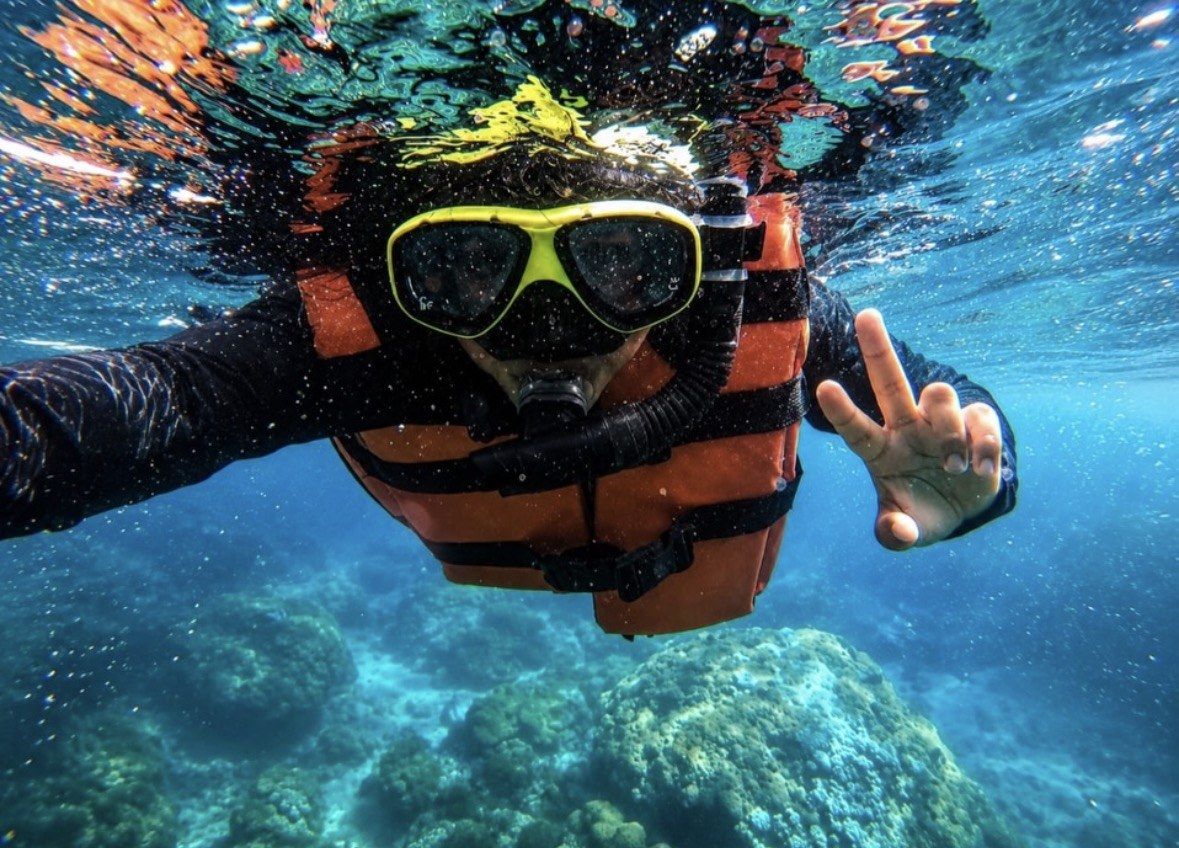
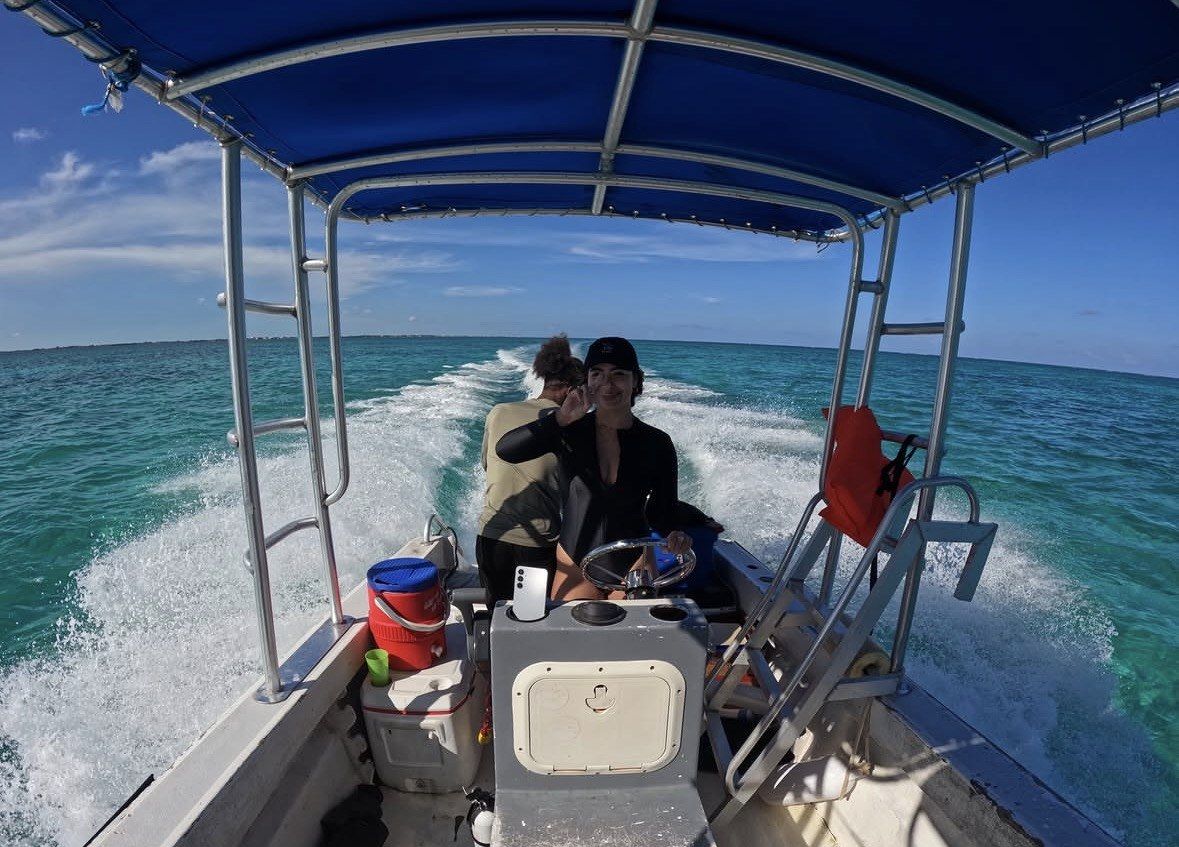
Culebra won your comparison and you are coming from the mainland without a car, so look at this 10-hour trip: the Ceiba crossing, Flamenco admission, gear, island transport and guided snorkeling with opportunities to swim with sea turtles sit in one booking.
★ 4.7/5 · 1,529 reviews
Vieques vs Culebra beaches, side by side
Beach character is where the two islands separate most clearly. Culebra puts nearly all of its beach infrastructure in one place: Flamenco, a mile-long horseshoe, is where you find restrooms, changing rooms, showers, picnic tables, chair and umbrella rentals, food kiosks, camping and a large parking lot, and it is also the single beach on the island with lifeguards on duty. At Melones, Tamarindo, Carlos Rosario, Punta Soldado and Zoni there are no lifeguards at all. ACDEC, the municipal Autoridad de Conservación y Desarrollo de Culebra, collects admission and parking at the Flamenco gate, and the sign at the entrance gives the figure to go by on the day.
The refuge beaches on Vieques are picnic grounds. The Fish and Wildlife Service names Caracas Beach, La Chiva Beach, Playa Grande, Playuela Beach, Corcho Beach and Puerto Ferro, with gazebos, tables and many grills. Open fires and camping are prohibited there, along with off-road driving, drones, littering and removing plants or animals, and bikes and horses are kept off the beaches.
Flamenco's reef is confined to the east end, and you get in and out through the gap between the two rows of concrete and rock rather than crossing the reef. When snorkeling is the whole point of the session on Culebra, go to Melones, Tamarindo or Carlos Rosario instead, and get in before 10 AM while the leeward coves are still flat.
| What you are comparing | Culebra | Vieques |
|---|
| Size and population | About 11.6 sq mi, main island roughly 7 by 5 miles, 1,792 residents at the 2020 Census | About 52 sq mi, roughly 20 miles long and 4.5 miles wide, 8,249 residents at the 2020 Census |
|---|
| Marine protection that shapes snorkeling | Canal de Luis Peña Natural Reserve, about 1,208 acres, first no-take marine protected area in Puerto Rico, fishing banned by DNER order since 1999 | Vieques National Wildlife Refuge, about 17,771 acres of refuge land, a major portion of the eastern refuge closed for unexploded ordnance |
|---|
| Shore-entry snorkel beaches | Melones, Tamarindo and Carlos Rosario on the sheltered southwest coast, plus Flamenco's east-end reef | Bahía de la Chiva (Blue Beach), Esperanza Beach under the pier, Media Luna's protected cove, Playa Pata Prieta, Punta Arenas (Green Beach) |
|---|
| Boat snorkel sites | Cayo Luis Peña, about 342 acres of refuge land, and Isla Culebrita about 5 miles offshore | Cayo Blanco and Cayo de Afuera by tour, Cayo de Afuera also by kayak |
|---|
| Beach facilities | Flamenco has restrooms, changing rooms, showers, picnic tables, chair and umbrella rentals, kiosks, camping and lifeguards | Refuge beaches have gazebos, tables and many grills; camping and open fires are prohibited |
|---|
| Main roads | PR-250, PR-251, PR-252 and PR-253, with one bridge | PR-200 and PR-201 |
|---|
| Public ferry from Ceiba | About 1 hour 30 minutes, adult fare $2.25 one way for ages 13–59 | About 1 hour, adult fare $2.00 one way for ages 13–59 |
|---|
| After dark | Night and UV/fluoro dives are among the courses the Dewey dive shop runs | Mosquito Bay, named the brightest bioluminescent bay in the world by Guinness World Records in 2006, with kayaking arranged through local vendors |
|---|
Turtles, fish and the rules that apply on both islands
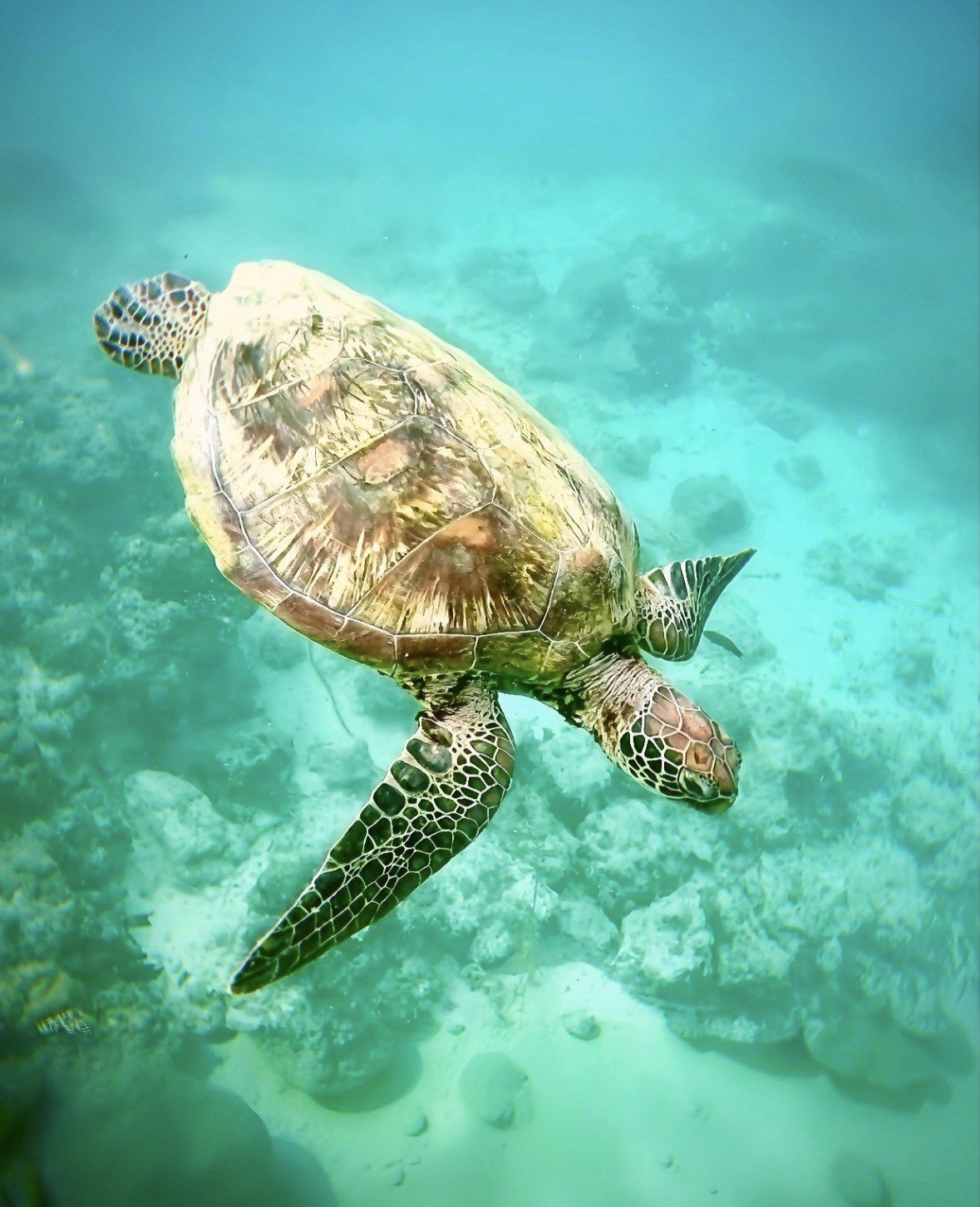
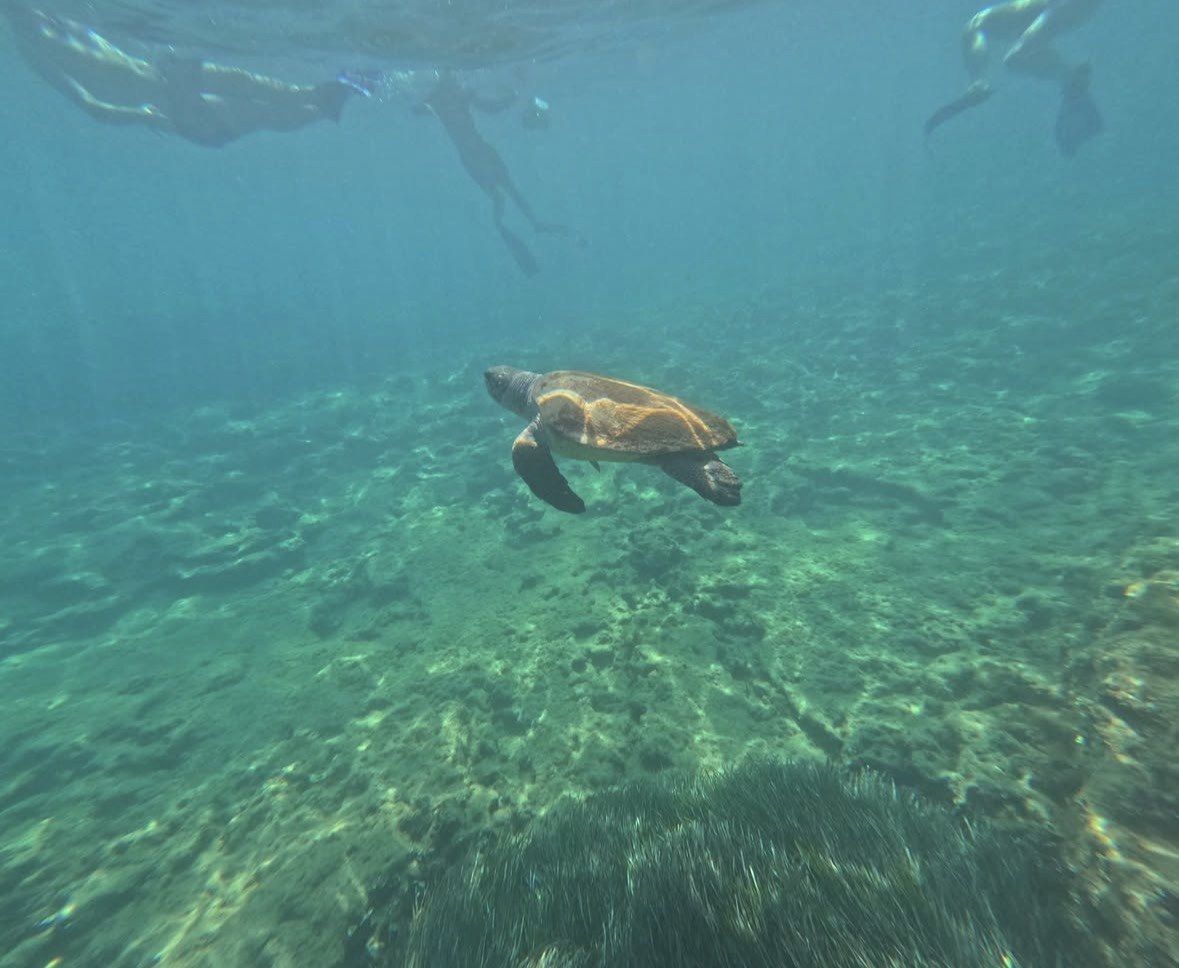
Green turtles are the draw on Culebra, and the seagrass is the reason. Every seagrass bed around the island is designated critical habitat for endangered species and legally protected, so standing on it or dragging fins through it is prohibited, and the beds off Tamarindo and Melones are exactly where the animals feed. Culebra National Wildlife Refuge, created by Executive Order 1042 on 27 February 1909, lists hawksbill, green and leatherback turtles among its notable wildlife and runs to 1,510 acres across 21 offshore cays.
Hawksbills are reported on the Vieques reefs, along with angelfish, parrotfish, butterflyfish, eagle rays, nurse sharks and stingrays. The viewing rules do not change between islands: NOAA's distance for U.S. waters is 50 yards minimum between you and a turtle in the water, and its guidance rules out touching, riding, petting or any other attempt to make contact.
Coral guidance for Culebra is just as plain. Reef advice for the island treats every contact as damage, including a hand, foot or fin laid on it lightly; boat crews are asked to pick up a mooring buoy rather than drop an anchor, and to cut speed close to shore and over the shallows. The refuge's public areas and hiking trails are accessible daily between 6:00 AM and 6:00 PM, which is the window your shore sessions have to fit inside.
Size, roads and getting around after you land
Culebra is small enough to work without much planning. The municipality covers about 11.6 sq mi, the main island measures roughly 7 by 5 miles, and four highways do the whole job: PR-250 runs about 9.0 km (5.6 mi) from the Port of Culebra pier east to its dead end at Zoni, PR-251 covers 2.9 km (1.8 mi) from the airport junction up to Flamenco, PR-252 runs 1.5 km (0.93 mi) to where the municipal roads to Melones begin, and PR-253 heads 2.8 km (1.7 mi) south from the drawbridge. Melones is walkable from Dewey. Shared taxis cover the dock-to-Flamenco leg for about $5 per person each way, which is how most arrivals do it on a road without sidewalks.
Vieques runs at a different scale: about 52 sq mi, roughly 20 miles long by 4.5 miles wide, with PR-200 and PR-201 as the major routes. Spread that far, your snorkel beaches are a drive apart rather than a cart ride.
Neither island takes your rental car. Residency decides it: a vehicle goes aboard only if its owner lives on Vieques or Culebra, and those tickets are sold at the port windows and nowhere else. Mainland drivers heading to either island park at Ceiba, where the secure lot costs around $15 per day and a shuttle loops to the gate without a timetable. On Culebra, Carlos Jeep Rental works from an office on Carr. 250 and a second on PR-251 at the airstrip, opens seven days a week and takes bookings on (787) 742-3514; públicos and taxis cover the rest.
Mosquito Bay and what doing both islands costs in time
Mosquito Bay is the one thing Vieques has that Culebra does not. Also called Puerto Mosquito, it was named the brightest bioluminescent bay in the world by Guinness World Records in 2006, it is a national natural landmark, the glow comes from the dinoflagellate Pyrodinium bahamense, and kayaking is permitted through local vendors. If that evening on the water is non-negotiable, Vieques gets at least one night of your trip.
Doing both islands by ferry costs most of a day every time you move. Count about 1 hour 30 minutes of sailing to Culebra and about 1 hour to Vieques, then add the hour you are required to be standing at the terminal beforehand and the boarding cut-off 10 minutes before the sailing. A ticket you do not use is not refunded; it can only be transferred, twice at most, and no later than an hour before departure. The inter-island adult fare from Vieques to Culebra is $2.00. Departure times exist only in a dated official itinerary, the edition in force covering 1 August to 30 November 2026, so rebuild any island-hopping plan against the operator's live timetable rather than an old screenshot.
Flying keeps your water time. Vieques Air Link advertises daily hops linking San Juan Isla Grande, Ceiba, Vieques, Culebra and St Thomas on Britten-Norman Islander and Piper Cherokee 6 aircraft, most of them under 25 minutes. Culebra's Benjamín Rivera Noriega Airport is also served by Air Flamenco and Cape Air, and its single 2,600 ft runway limits traffic to propeller aircraft of 10 seats or fewer, so a group can fill a departure. Fares and times are handled by phone.
The verdict by traveller type
Five calls, depending on what the trip is actually for.
- Snorkel-first: Culebra, two nights minimum. Morning sessions off the reserve beaches on the leeward southwest coast, then one boat day for Carlos Rosario, Cayo Luis Peña or Culebrita. The 6-hour all-inclusive beach and snorkel day listed here runs from $168 and musters at 8:00am, which puts you over reef before the wind arrives.
- Family with children: Culebra, with Flamenco as the base. No other snorkel beach on the island has lifeguards, and the restrooms, changing rooms, showers and kiosks are all there. The Dewey dive shop's conditions are the baseline to apply anywhere: swim unassisted, minimum age six for snorkeling, and a parent or guardian present with written consent for anyone under 18.
- One-day visitor with no car: Culebra, on the 10-hour ferry-based snorkel day from $146, rated 4.7 from 1529 reviews. One booking covers the round-trip Ceiba crossing, Flamenco admission, snorkel gear including a flotation belt, ground transport around the island and guided interpretive snorkeling with opportunities to swim with sea turtles. Plan to buy lunch on the island, since the price does not cover it.
- Multi-day across both: give Culebra the snorkeling days and Vieques one night for Mosquito Bay, and move between them on the sub-25-minute air hop instead of chaining ferry sailings. Cancelling a trip listed here at least 24 hours before its scheduled departure time returns the full amount, which helps while an island-to-island connection is still unsettled.
- Timing either island: December to March is the local dive and snorkel high season and the steadiest sea state, so book weeks ahead. The slower months, May to October, are easier to secure and sit inside the Atlantic hurricane season, which officially runs 1 June to 30 November and climbs to its climatological peak on 10 September.
Questions people ask
Is the ferry to Culebra cheaper than the one to Vieques?
Vieques is slightly cheaper and shorter. The adult one-way fare from Ceiba is $2.00 for ages 13 to 59 against $2.25 to Culebra, and the crossing takes about 1 hour instead of about 1 hour 30 minutes. Children 4 to 12 and adults 60 to 74 pay $1.00 on either route, and infants 0 to 3 and travellers 75 and over are not charged. Items you carry aboard are billed separately: $2.00 for a beach cooler and $2.00 for a bicycle.
Does the ferry to either island leave from Fajardo?
No. Both island services use Ceiba: the terminal at Marina Dr., Roosevelt Roads (Ceiba PR 00735), with the Culebra end on Calle Pedro Márquez in Dewey. From San Juan that is about 35 miles on PR-66 and PR-3, roughly 1 hour 15 minutes to 1.5 hours behind the wheel. The boat trips listed on this site leave from Fajardo marinas instead, which is a separate operation from the ferry.
Can I snorkel Culebra's best shore reef without a boat?
Yes, on foot, but treat it as a morning project. No road reaches Carlos Rosario: you leave from the back left corner of the Flamenco parking lot and cross an exposed hill, just under a mile, roughly 20 to 30 minutes, past a refuge sign about unexploded ordnance left by the Navy-era ranges that states use of the trail is at your own risk. Nothing waits at the beach itself, and the current runs strong in places, so bring your own water and put on shoes you can walk a hill in.
Do I need to rent snorkel gear in advance on Culebra?
No reservation is needed for gear. Dewey's dive shop sits straight across from the ferry terminal and runs Monday to Saturday, 9 AM to 4 PM, hours subject to change. A mask, snorkel and fins set goes for $20 per day, $25 if you add a vest, and $16 per day once a rental runs five days or longer. Boat trips, including those listed here, already include gear, so renting is really for shore days.
Where is the closed-off ordnance land, and does it affect snorkeling?
Both islands carry Navy-era legacy. On Vieques, a major portion of the eastern wildlife refuge is closed to the public because of unexploded ordnance, which limits where you can reach the coast. On Culebra, the trail to Carlos Rosario is signposted with a refuge ordnance warning, and the Flamenco peninsula and the cays beside it are closed to visitors to protect nesting sooty terns. The reserve beaches on Culebra's southwest coast are open and reachable by road.
Read also