In shortCulebra scuba diving runs off a single small dive boat out of Dewey, with the crew choosing from over 50 sites each morning according to conditions: reef at Carlos Rosario, the 1984 tugboat wreck Wit Power, Cayo Agua Rock and the 120-foot wall at Cayo Ballena. Certified divers dive two tanks; first-timers start with Discover Scuba. Minimum age is twelve.
About 50dive sites around Culebra
12minimum age for scuba
120 ftwall dive at Cayo Ballena
6places on the shop's boat
What Culebra scuba diving looks like on the day
There are about 50 dive sites around the island, and the crew picks the day's destination each morning from over 50 options depending on conditions. That is the single most useful thing to understand about diving Culebra, Puerto Rico: you do not book a site, you book a boat, and the wind decides the rest. The spread of sites is wide for an island this small, taking in long shore reef, an isolated rock standing in sand, a wall, a sunken tugboat and an arch of coral.
The sheltered water is on the southwest, leeward side, the coast between the Flamenco Oeste peninsula and Punta de Vapor, which is why Carlos Rosario keeps appearing on dive plans when the trades are up. The outer cays sit further out, and most of the water around them is wrapped in refuge land: Culebra National Wildlife Refuge takes in 21 offshore cays across its 1,510 acres.
Depth figures for the individual named sites are not published anywhere official, and neither is monthly visibility for this coast, so treat anything you read with a number attached to those with suspicion. What the sources do give is scale: Cayo Ballena is described as a 120-foot wall dive, and Cayo Agua Rock as a single rock roughly 45 feet tall rising out of sand. Ask the crew at the dock what they are planning and what they expect to see down there.
The Culebra dive sites people name
Six sites turn up by name in published descriptions of the island's diving, and they cover most of the formats you would want from a week here. Carlos Rosario is the same reef the shore snorkelers walk over the hill for, approached from the water instead; divers know it as Impact.
Wit Power is the island's wreck, a tugboat put down in 1984. Cayo Yerba's arch is covered in yellow cup coral, which blooms after dark, so it reads as a different dive at night than it does at midday.
| Site | What is published about it |
|---|
| Carlos Rosario (Impact) | Reef that runs a long way, described as healthy, with huge sea fans on it |
|---|
| Wit Power | Tugboat wreck, sunk in 1984 |
|---|
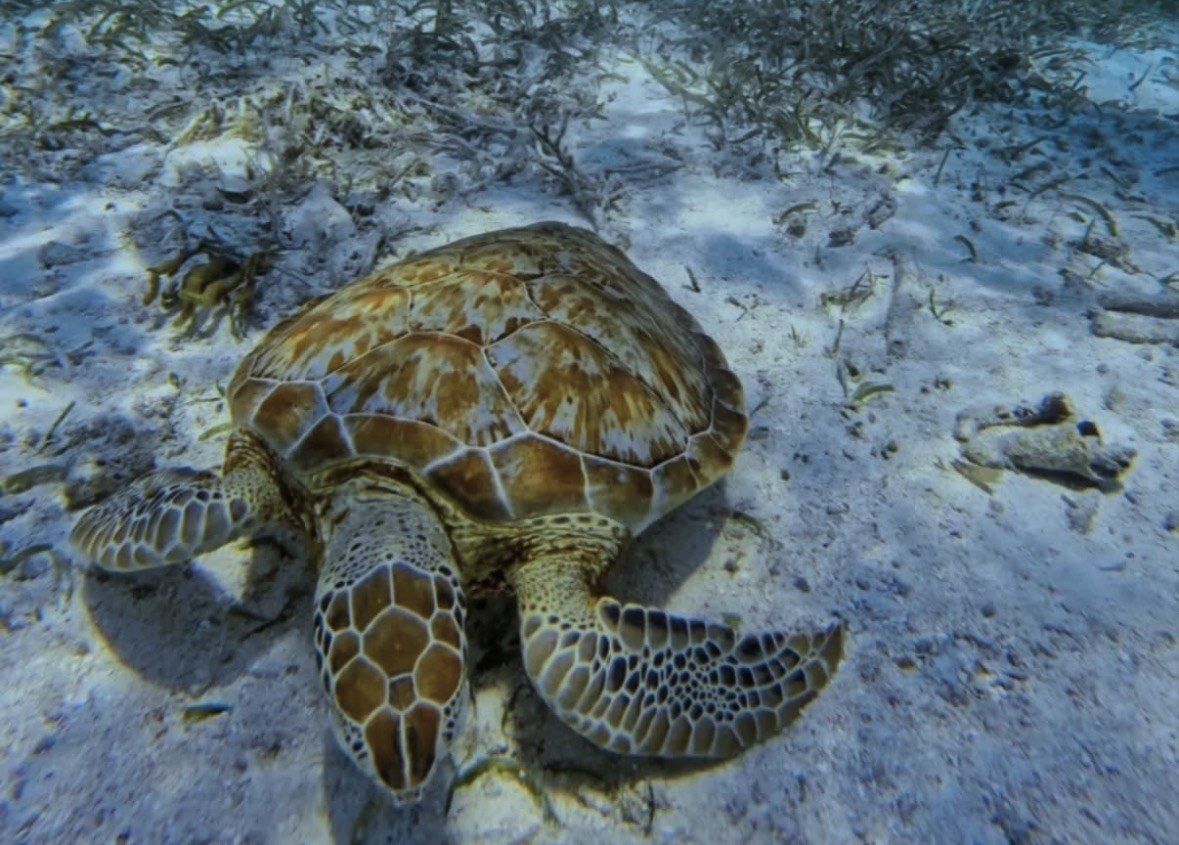
| Cayo Agua Rock | A single rock about 45 feet tall surrounded by sand, with barracuda, nurse sharks and turtles |
|---|
| Cayo Ballena | A 120-foot wall dive |
|---|
| Cayo Raton | Named among the island's dive sites |
|---|
| Cayo Yerba | An underwater arch covered in yellow cup coral that blooms at night |
|---|
Never dived before, or need a refresher
First-timers get in the water on Discover Scuba, which is the entry point in the course list available on Culebra. From there the ladder runs through Open Water certification and referrals, scuba refreshers for anyone whose last dive was years ago, Advanced Open Water, Nitrox, night and UV or fluoro dives, and on to PADI Master Diver or Divemaster. If you are mid-course on the mainland, the referral option is the one to ask about before you travel.
The age rules differ between the two activities and catch families out. Snorkeling starts at six; scuba starts at twelve. Everyone getting in the water has to be able to swim unassisted, and anyone under 18 needs a parent or guardian present along with written consent, so a teenager cannot be dropped at the dock with a signed form and a lift home.
- Discover Scuba for a first breath underwater, from age twelve
- Open Water certification, plus referrals if you started the course elsewhere
- Scuba refreshers before you get on a two-tank boat after a long gap
- Advanced Open Water and Nitrox
- Night dives and UV or fluoro dives
- PADI Master Diver and Divemaster
Shop hours, boat places and the season to aim for
The dive shop is Culebra Divers at 4 Calle Pedro Marquez, directly across from the ferry terminal in Dewey, with store hours listed as Monday to Saturday, 9 AM to 4 PM and a note that hours are subject to change. Walk off the ferry and you are at the door, which makes an afternoon arrival workable for gear and a conversation even if your first dive is the next morning.
One boat, six participants maximum. Snorkel gear rental takes no reservation at all, but boat trips have to be secured with a credit card, and the shop states plainly that walk-on space is not guaranteed. In practice that means booking before you travel rather than after you land, and it matters most in winter: the island's dive and snorkel high season is December to March, with the slower stretch running May to October.
Two-tank dives have been published at $130 including tanks and weights, with gear rental available, and the boat's snorkel trip is listed on the shop's own site at $75 per person plus tax. Prices move, so confirm the current figure when you reserve. The dock has a freshwater shower and a gear-wash tank, gear storage if you are staying over, and an AED on board.
Divers who never make it to the island because the sea or the weather stopped the ferries or the flights may not be charged for the dive they had on the books, which is what the shop's own policy says. That policy exists because it happens, and the window where it happens most is the Atlantic hurricane season, officially 1 June to 30 November, with its climatological peak on 10 September. A trip built around diving should not be hung on the first half of September.
A snorkel day for the non-divers
Seven hours on the water from $162, rated 4.6 from 430 reviews, with gear, drinks and a deli buffet, so the people in your group who are not diving still get a full day over reef.
★ 4.6/5 · 430 reviews
The protected-area rules that apply with a tank on
Culebra's water has two layers of protection, and both reach the bottom. The outer one is federal: Executive Order 1042, signed on 27 February 1909, set up Culebra National Wildlife Refuge, so the land ringing most of your dive sites has been among the Caribbean's oldest federal wildlife reserves for over a century. The inner one is the Canal de Luis Peña Natural Reserve on the southwest coast, which is where the boat heads on a windy morning: it was designated on 11 June 1999 at the end of an 18-year local campaign, it covers roughly 4.8 square kilometres (1,208 acres), and it was the first no-take marine protected area declared in Puerto Rico, its flora and fauna protected from removal by law. Fishing inside the channel was shut down by a DNER administrative order issued in that same year.
Inside the reserve nothing may be removed from the water, and that includes shells, coral fragments, fish and anything sitting on the wreck. Reef guidance for Culebra is blunt about contact: the lightest touch of a hand, foot or fin can damage coral, so dive with your hands tucked in and your buoyancy sorted before you go anywhere near a wall or an arch.
The seagrass beds are legally protected as critical habitat for endangered species, so standing on them or dragging fins through them is prohibited. Boats visiting these reefs are asked to tie to mooring buoys instead of dropping an anchor, and to slow down near shore and in the shallows, which is worth knowing if you are chartering privately rather than riding a dive boat that already does it. Around turtles, NOAA viewing guidance for U.S. waters sets the distance at 50 yards, and touching, riding, petting or any attempt to interact is not permitted.
If you are diving and the rest of the group is not
The shop's single boat caps the day at six participants, so a mixed group of divers and non-divers cannot always be solved on one hull. Send the non-divers out on a snorkel day of their own instead, and keep the dive slots for the people who need tanks.
For them, the straightforward option on this site is the 6-hour all-inclusive beach and snorkel day: from $168, a 4.7 rating across 1083 reviews, snorkel gear provided, non-alcoholic drinks and rum drinks on board, and a light lunch of cold-cut sandwiches, fresh fruit, chips and dips. If someone in the party eats vegan or gluten-free, send them on the 7-hour snorkel and beach day with lunch and drinks instead: from $162, rated 4.6 across 430 reviews, with a deli buffet you build yourself, vegetarian pasta salad, a fruit platter, chips and cookies, a $3 marine fee paid in cash at check-in, and the vegan or gluten-free plate at $6 per person extra when you phone ahead to request it. Both return the full amount if you cancel at least 24 hours before the scheduled departure time, which is the clause that lets you hold dates while the dive plan firms up.
Questions people ask
Is nitrox available on Culebra?
Nitrox appears in the course list available through the island's dive shop, so the training side is covered. Whether fills are sold on the island, and whether equipment servicing or repair is available locally, is not published by any source we can verify. Email or phone the shop before you travel if your dive plan depends on either.
Can I dive the outer cays and Culebrita?
The outer cays are part of the dive spread: Cayo Agua Rock, Cayo Ballena, Cayo Raton and Cayo Yerba all appear among the island's named sites, and the refuge takes in 21 offshore cays. Culebrita sits about 5 miles offshore with boat access only, and there is nothing waiting on it: no facilities, no lifeguards. Boats working these reefs tie to mooring buoys rather than anchoring, and slow down in the shallows.
Can a non-diver come along on the boat?
The shop runs a single boat with a six-participant maximum, so space is the limiting factor rather than willingness. Its own snorkel trip departs the dock at 2:00 PM after a 1:30 PM gear fitting and is back around 4:30 PM, a roughly 2.5-hour outing capped at six snorkelers. Boat places have to be secured with a credit card either way, and walk-on space is not guaranteed.
Do I need to bring my own dive gear?
Published pricing for two-tank dives at $130 includes tanks and weights, with rental gear available, so you can travel light if you want to. Most divers still bring a mask they know fits. The dock has a freshwater shower and a gear-wash tank, and gear storage if you are staying on the island for several days.
Read also